Water pressure is something most homeowners only think about when it suddenly becomes a problem. One day your shower feels strong and steady, and the next it trickles like a slow faucet. Low pressure can make everyday tasks frustrating, while high pressure can damage pipes and fixtures. Understanding why these changes happen can help you protect your home and know when it is time to call a professional like Henry Plumbing Company for support.
This guide walks through the most common causes of water pressure problems, how to spot early signs, and what you can do to restore steady, reliable flow throughout your home.
Why Water Pressure Matters
Water pressure affects almost every part of your daily routine. It determines how well your shower works, how long it takes to wash dishes, and how quickly you can fill a bathtub. Consistent pressure also helps plumbing systems run smoothly. When the pressure is too low, appliances may not operate correctly. When it is too high, pipes and fixtures are placed under unnecessary stress.
Most homes in the United States are designed to operate at a water pressure level between 40 and 60 psi. Anything significantly lower or higher can signal a problem.
Common Signs of Water Pressure Issues
Homeowners often notice symptoms before they identify the exact cause. Some of the most frequent signs include:
- Slow-running faucets
- Weak shower flow
- Washing machines are taking longer to fill
- Fluctuating pressure when multiple fixtures run at once
- Sudden bursts or drops when you turn on a tap
- Whistling or banging pipes
If you consistently notice one or more of these signs, it may be time to investigate further.
What Causes Low Water Pressure
Low pressure is one of the most common complaints. Several factors can lead to a drop in flow, and some are easier to fix than others.
Mineral Buildup in Pipes or Fixtures
Hard water is common in many parts of the country. Minerals like calcium can collect inside pipes over time. This buildup restricts water flow and reduces pressure throughout the home. Faucet aerators and showerheads are often the first to clog since they have mesh screens.
Regular cleaning can help, and installing a reliable water treatment system may reduce future buildup. Some homeowners in Florida choose Florida water treatment systems to keep water quality under control.
Partially Closed or Faulty Shutoff Valves
Your home has multiple valves that control the flow of water. If a valve near the meter or the main supply is not fully open, it can reduce pressure everywhere. This can happen after repairs or routine maintenance if someone forgets to reopen a valve fully.
A quick inspection can solve the issue, but if a valve is damaged, you may need professional help.
Pipe Leaks
Even a small leak reduces the amount of water reaching your fixtures. Leaks in hidden areas like crawl spaces, underground lines, or behind walls can be hard to detect. Some signs include unexplained wet spots, higher water bills, or running water noises when all fixtures are off.
Pipe leaks should be fixed quickly to prevent structural damage or mold growth.
Issues With the Municipal Supply
Sometimes the issue is not inside your home. Your neighborhood may experience low pressure due to repairs, high demand, or maintenance on city lines. If the problem starts suddenly and affects multiple homes, this may be the cause.
Your local water provider can confirm the status of the supply and let you know when service will return to normal.
Faulty Pressure Regulator
Many homes have a pressure regulator near the supply line. If it fails, your water pressure can drop. Regulators last 10 to 15 years on average. A failing regulator often causes unpredictable fluctuations rather than a steady drop.
A professional plumber can test the regulator and replace it if needed.
What Causes High Water Pressure
High pressure can be just as damaging as low pressure. It puts stress on pipes, appliances, and fixtures, shortening their lifespan.
Municipal Pressure Levels
Cities sometimes deliver water at higher pressure to serve tall buildings or large commercial properties. If your home does not have a functioning regulator, this higher pressure can enter your plumbing system.
Thermal Expansion
Water heaters create thermal expansion as they heat water. If your system lacks an expansion tank, the pressure can rise every time hot water is used. This can lead to leaks or early wear on valves and connections.
Pressure Regulator Failure
A failing regulator can allow high pressure into your home. If you notice toilets running on their own or strange banging noises, the regulator may need attention.
How to Test Your Home’s Water Pressure
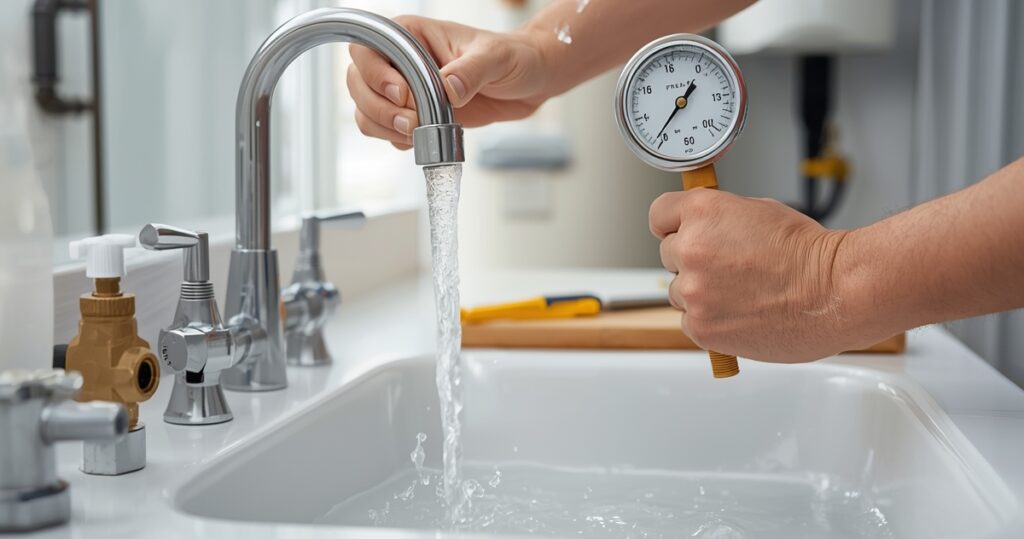
Testing your water pressure can help pinpoint the issue. You can purchase a simple gauge at most hardware stores.
To test:
- Attach the gauge to an outdoor spigot or laundry tub faucet.
- Turn off water-using appliances.
- Open the faucet fully and read the gauge.
If the reading is below 40 psi or above 80 psi, you likely have a pressure problem. If the pressure changes throughout the day, note the times and compare patterns.
Steps You Can Take Before Calling a Plumber
Some issues have simple fixes you can try at home.
Clean Faucets and Showerheads
Removing and soaking aerators or showerheads in vinegar helps dissolve mineral deposits. Rinse and reinstall them to see if pressure improves.
Check Valves
Inspect your main shutoff valve and any smaller supply valves. Make sure they are fully open.
Look for Leaks
Walk through your home and yard to check for damp areas, pooling water, or noises that may indicate a leak.
Replace Old Fixtures
Older fixtures may not perform well even with good pressure. Newer models often provide better flow and efficiency.
If none of these steps helps, a professional inspection is recommended. A skilled plumber can check for deeper issues inside your system.
When to Call a Professional
Some situations require expert attention. Contact a plumbing service if you notice:
- Sharp drops in pressure that happen suddenly
- Water discoloration along with low flow
- Repeated leaks or burst pipes
- Pressure readings that stay above 80 psi
- Pressure fluctuations that occur daily
Professionals can diagnose the cause and recommend long-term solutions that protect your home and plumbing system.
How Professional Plumbers Fix Water Pressure Problems
Plumbers utilize advanced tools to identify the source of pressure issues. Depending on what they discover, solutions may include:
- Cleaning or replacing sections of pipe with heavy mineral buildup
- Repairing or replacing damaged valves
- Installing or adjusting a pressure regulator
- Adding an expansion tank for your water heater
- Fixing leaks in hidden areas using noninvasive detection tools
If you are searching for reliable help, many homeowners look for residential plumbing services in Punta Gorda to resolve these issues quickly and safely. A trusted provider can restore balanced flow and prevent future problems.
Protecting Your Home From Future Pressure Issues
Once your blood pressure returns to normal, there are several ways to maintain consistency.
- Monitor your pressure readings a few times a year.
- Flush your water heater regularly to limit sediment buildup.
- Install filtration or treatment systems if you live in a hard-water area.
- Have older plumbing systems inspected every couple of years.
- Replace regulators before they reach the end of their lifespan.
A little preventive care goes a long way toward avoiding costly damage and keeping your system healthy.
Keeping Your Plumbing System in Good Shape
Water pressure problems are common, but they are usually manageable once you understand the symptoms and causes. Paying attention to small changes helps you prevent larger issues later. Whether the problem begins inside your home or comes from the main supply, the key is to act quickly and rely on professionals when needed.
If you are ready to get a steady water flow back in your home, or you want a trusted team to take a closer look at your plumbing system, visit Henry Plumbing and schedule a service with the experts at Henry Plumbing.